Painting of two men seated at a table, absorbed in a card game

The Pottery Loop

Mahjong Mondays

Seven weeks of pottery and mahjong

A 7-week handbuilding course for the mahjong obsessed and the mahjong curious. Build the mug, the rack, the box, and the magnets your table has been missing, and pick up (or brush up on) the game along the way.

Reserve your spot

$285 · 7 Mondays · all levels

Paul Cézanne, The Card Players, 1890 to 1892. Public domain.

Here's the thing about mahjong sets: a full one runs 136 to 152 tiles. That's too much for a beginner course, so we build the pieces you'll actually use instead.

Over seven Mondays, you'll handbuild a full ceramic accessory collection for your table: a mug to drink from, a rack to hold your hand, a box to store your set, and a run of custom magnets to send home with. Two sessions along the way cover mahjong itself, shaped around whichever style your table plays.

The course, panel by panel

Seven Weeks of Pottery and Mahjong

Techniques build week to week, so you finish with a collection made for the way you actually play.

Handmade ceramic mug with red and green mahjong dragon tiles applied to the side
01

Week 1

The Mahjong Mug

Start the course by handbuilding your own mahjong themed mug, the essential vessel for your tea, coffee, or cocktail during game night. This week covers foundational forming techniques and an intro to underglaze and surface decoration, which you'll use to hand paint mahjong tile motifs (dragons, bamboo, dots, winds, and characters) directly onto your piece.

Long ceramic mahjong tile rack with a hand painted personalised inscription
02

Week 2

The Tile Holder / Rack

No more balancing your tiles in a wobbly line. This week you'll build a ceramic mahjong tile holder and rack, the kind you use tableside during play to keep your hand organized and hidden from opponents. We'll focus on slab-building techniques, precise measuring for functional tile grooves, and clean, even edges.

Blue glazed ceramic storage box with mahjong wind and dot tiles around the outside
03

Week 3

The Mahjong Storage Box

Every set needs a home. This week's project is a ceramic box built to store your mahjong tiles (or any small collection) between games. We'll cover box construction, clean lip fitting, and design choices that balance form with function.

Set of small ceramic mahjong tile magnets arranged on a fridge door
04

Week 4

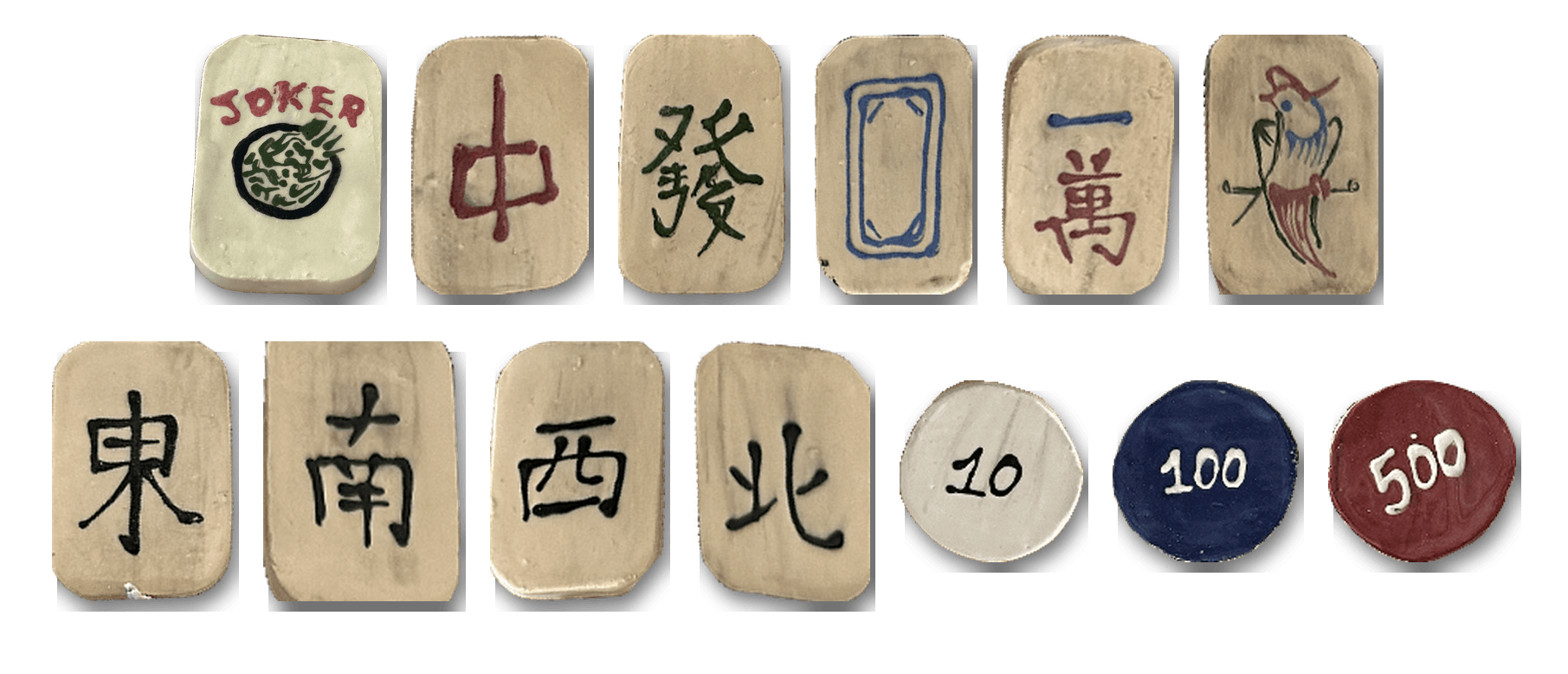
Custom Mahjong Magnets

A lighter, playful project: handbuild and detail up to 12 custom ceramic magnets featuring your favorite mahjong tile designs. Great for gifting, decorating your fridge, or building out a whole tile set in miniature, with no full 136-tile commitment required.

Student in a studio apron brushing green glaze onto a small ceramic bowl
05

Week 5

Mahjong Rules + Glazing Session I

No new build this week. Half the class is a beginner-friendly walk through mahjong rules and gameplay, shaped around whichever style (American or Traditional) your group leans toward, and the other half is your first glazing session, applying glaze to the pieces you've built so far.

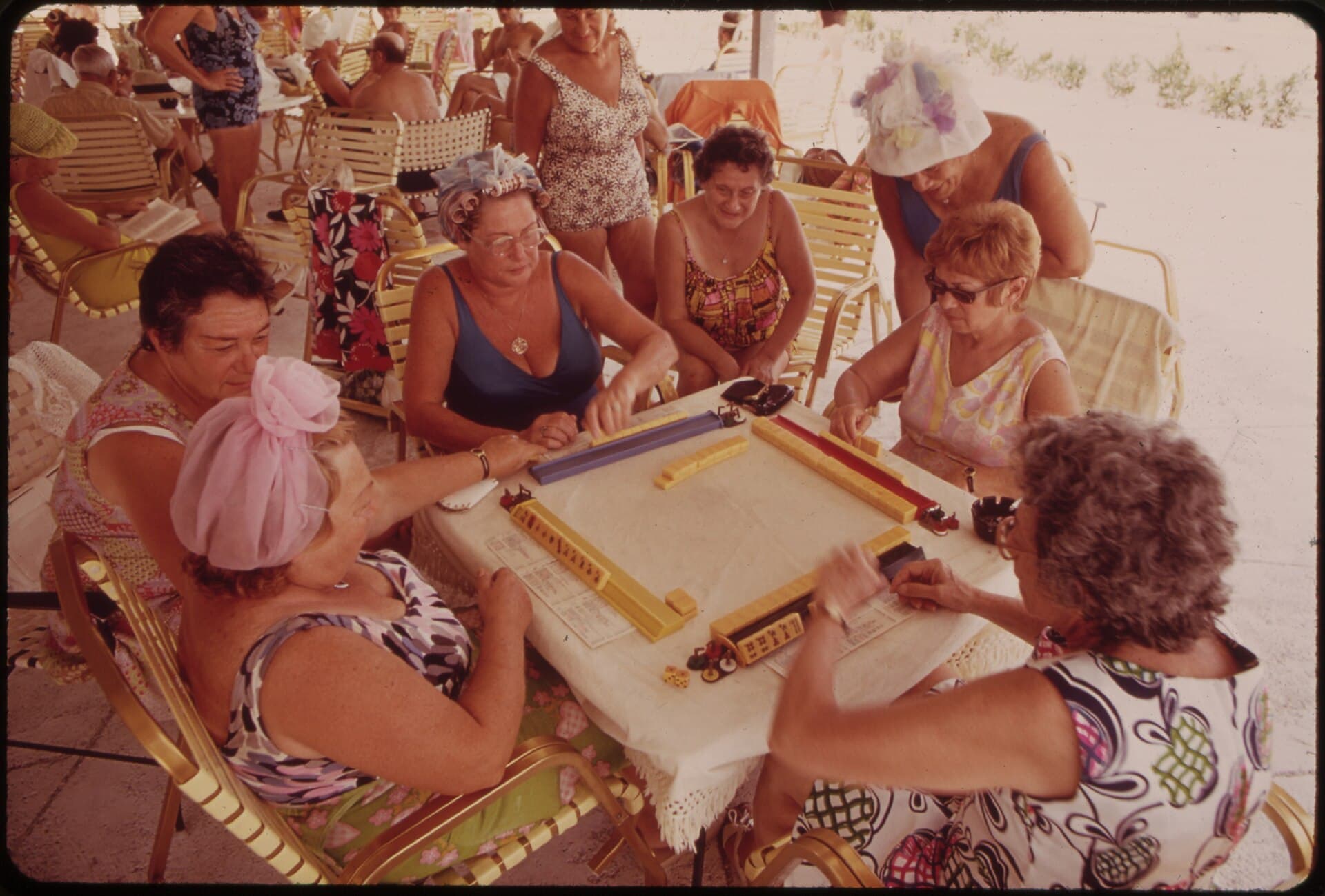
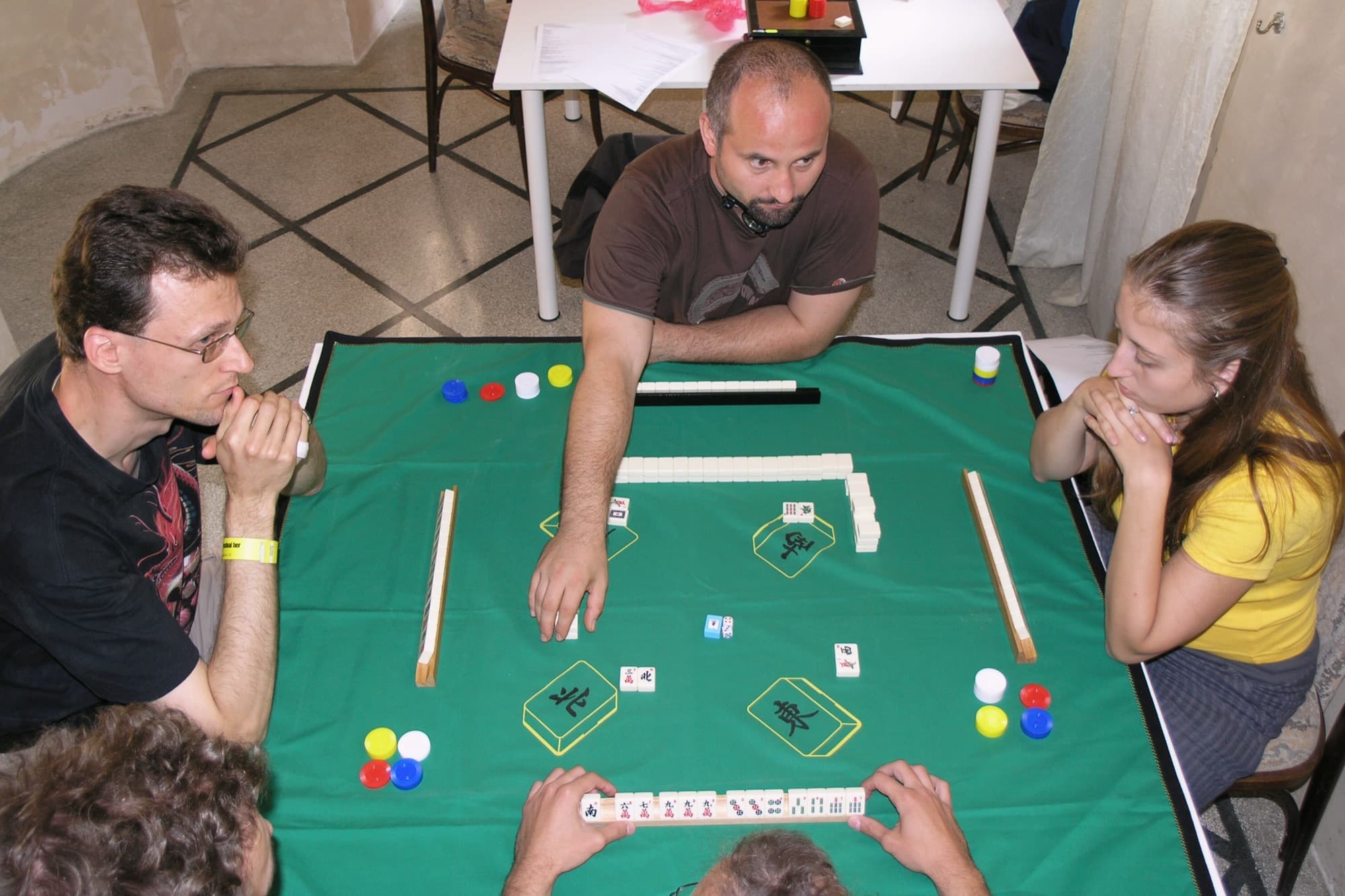
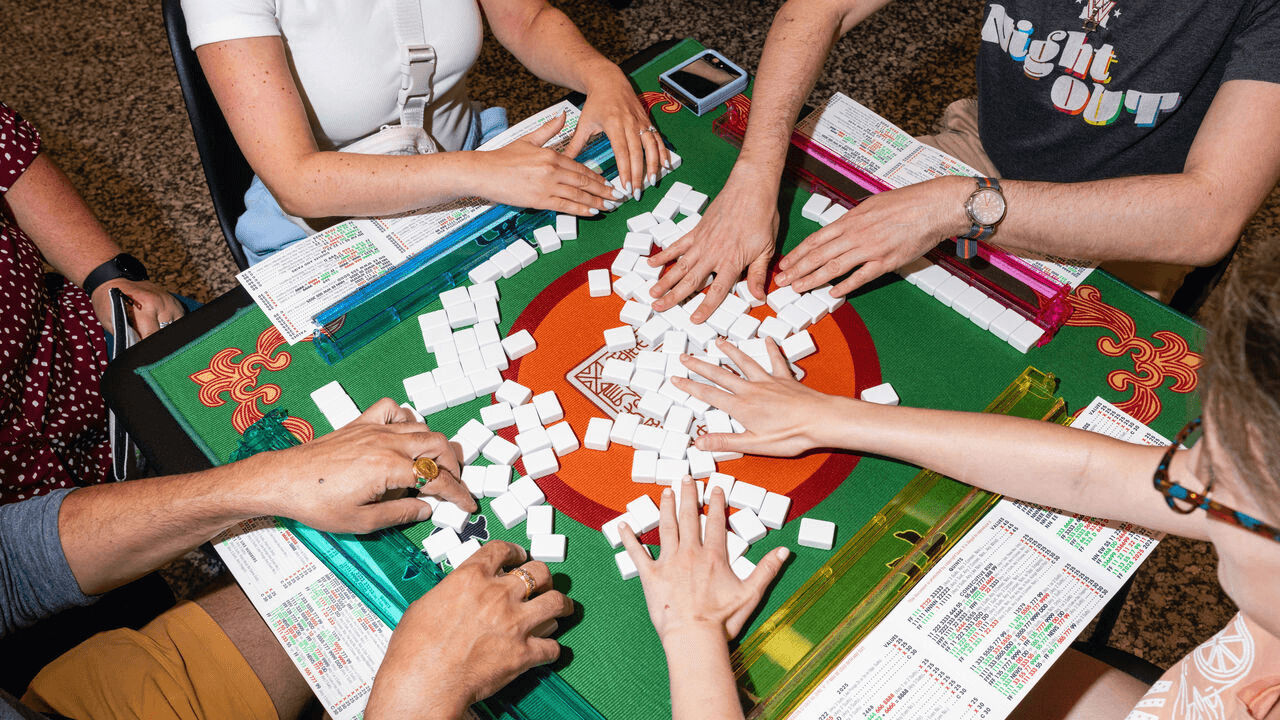
Overhead view of four players mid game around a mahjong table with tiles, racks, and drinks
06

Week 6

Variations, Playstyle + Glazing Continued

Instruction continues, building on the fundamentals from Week 5: this week covers how American and Traditional style play diverge (racks and jokers versus the original ruleset) with table time to try them out. Alongside the game, finish glazing any remaining pieces so everything is ready for its final firing.

Kraft paper takeaway bag with a Mahjong Mondays sticker and a hand lettered name label
07

Week 7

Pickup + Play

The send off. Your work comes out of the final firing, so you collect everything you've made over the course, then put it straight to work in one last mahjong session with the group.

Who This Course Is For

Short answer: pretty much anyone. Here's who tends to get the most out of it.

Complete beginners to both

Never played mahjong and never touched clay? This course is built to teach both from the ground up, no prior experience with either one required.

Longtime mahjong players

Already know your dots from your bams? Week 5 is a quick refresher on rules, then the rest of the course is all about building gameware you'll actually use.

Returning pottery students

If you've taken a class with us before and want a themed project series, this one comes with a running theme and a full table setup to show for it at the end.

Regular game night groups

Bring your usual mahjong circle and build a matching set of gameware together, or come solo and meet other Chicago mahjong folks around the table.

What You'll Learn

Two skill sets, taught side by side over seven weeks.

Pottery

  • Handbuilding fundamentals you'll use across every project
  • Underglaze and surface decoration for hand painted tile motifs
  • Slab-building for functional forms like racks and boxes
  • Glazing technique, split across two dedicated sessions

Mahjong

  • Identifying the tiles: dragons, bamboo, dots, winds, and characters
  • Beginner friendly rules in the style your table picks, American or Traditional
  • How the two styles diverge in racks, jokers, and hand structure
  • Table time to put it into practice with the group

Two ways to play

Register American Style or Traditional Style

Same seven weeks, same table of gameware. Tell us which ruleset your group wants the spotlight on, and we'll shape Week 5 and Week 6 around it.

Detail of a card player from a Baroque painting

Racks, jokers, and the card

American Style

Played with the National Mah Jongg League card, joker tiles, and racks with a sloped ledge. The style most home games across the U.S. have grown up on since the 1930s.

  • National Mah Jongg League card
  • Joker tiles in play
  • Sloped-ledge racks
Register, American Style
Detail of a woman concentrating over a board game

The original ruleset

Traditional Style

No joker tiles, hands built from matched sets and a pair, and a sharper focus on reading what everyone else has discarded. The ruleset American style grew out of.

  • No joker tiles
  • Hands built from sets and a pair
  • Reading the discards
Register, Traditional Style

Dates for the next Mahjong Mondays series are still being finalized. Registering by email holds your interest and a preferred style, we'll follow up as soon as a start date is locked in.

The Details

Duration
7 weeks (1 session per week)
Day
Mondays
Price
$285
Format
Handbuilding, no wheel required
Skill level
All levels welcome, no pottery or mahjong experience required
What you'll make
Handbuilt mahjong gameware for your table: a mug, tile holder, storage box, and custom magnets
What's included
All clay, glazes, firings, and studio tools, plus a mahjong rules session shaped to your group
Good for
Mahjong players wanting custom gameware, pottery students wanting a themed project series, gifts for the mahjong lover in your life, total beginners to either craft

Good to know

Questions

Do I need to know how to play mahjong to take this course?
Not at all. Week 5 includes a full walk through mahjong rules, and this course is built for total beginners as well as longtime players.
Do I need pottery experience?
No prior pottery experience is required. This is a handbuilding course, so there's no wheel to learn, and techniques are taught progressively across the 7 weeks.
What is the difference between American and Traditional style?
American style is played with the National Mah Jongg League card, joker tiles, and racks with a sloped ledge, the style most U.S. home games grew up on since the 1930s. Traditional style is the original ruleset it descended from: no joker tiles, hands built from matched sets and a pair, and more emphasis on reading the table.
Do I have to pick a style when I register?
It helps us shape Week 5 and Week 6 around your table, but it is a preference, not a commitment. Groups that want to see both are welcome to.
Can I sign up with my regular mahjong group?
Yes. Groups and pairs are welcome to register together, and solo sign-ups are just as welcome if you'd rather meet new mahjong folks in class.
Why doesn't this course include building a full mahjong tile set?
A traditional set runs 136 to 152 tiles depending on the variant, far too many for a 7-week beginner course. Instead, we focus on ceramic accessory projects you'll actually use during play.
What should I bring?
Just yourself. If you already own a mahjong set, feel free to bring it for the Week 5 and Week 6 sessions, but we'll have sets on hand either way. All clay, glazes, and firings are included in the course price.
Can I book this course for a private group or event?
For groups of six or more who want the full 7-week series to themselves, reach out and we'll look at scheduling a private run.

Why We're Not Making the Tiles

A full mahjong set runs anywhere from 136 to 152 tiles depending on the variant. That's an incredible pottery project, and an unrealistic one for a 7-week, beginner-friendly class.

Instead of asking you to handbuild a set of tiles you'll never finish, Mahjong Mondays focuses on the ceramic pieces that actually elevate your game: something to drink from, something to rack your tiles on, something to store your set in, and something small and playful to send home with you.

Painting of a woman in flowing robes concentrating over a board game

Seven weeks of pottery and mahjong fun. One new (or renewed) obsession.

Reserve your spot: $285

Questions? Reach out or email potterychicago@gmail.com.

Unknown Tang dynasty court painter, Beauty Playing Go, Tang dynasty, 8th century. Public domain.